The Language of Rooms: How America's Most Discerning Interiors Communicate Status Without Uttering a Word
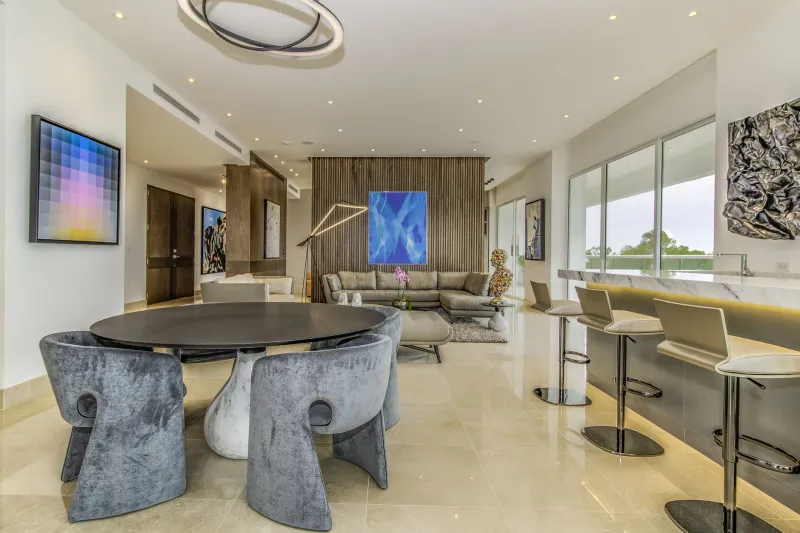
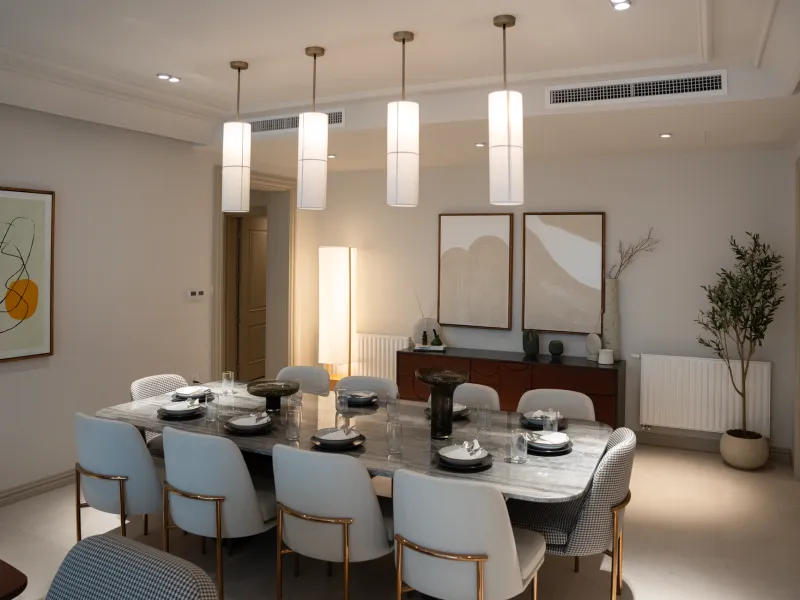
There is a particular kind of room that announces nothing. No monograms embossed on throw pillows. No recognizable retail gallery tags propped discreetly against a canvas. No chandelier whose silhouette has been photographed ten thousand times in hotel lobbies across the country. And yet, to anyone who has moved within certain circles long enough, that room speaks with extraordinary clarity. It says: the person who assembled this understands something you have not yet been told.
This is the gatekeeping aesthetic—an interior design philosophy that operates not through display, but through deliberate restraint, institutional knowledge, and a fluency in references that no amount of money alone can purchase.
The Obsolescence of the Obvious
For a previous generation of American wealth, the interior was a ledger. Identifiable furniture houses, name-brand art, and imported materials that carried their provenance on their surfaces served as legible proof of arrival. That era has quietly closed.
Among the most established members of today's elite—those whose wealth is generational rather than recent—the conspicuous has become the disqualifying. When a particular sofa silhouette appears in a dozen aspirational shelter publications within a single season, it ceases to function as a signal of discernment. It becomes, instead, evidence of consumption rather than cultivation.
The shift is not merely aesthetic. It is social. The interior has evolved into a vetting mechanism, a kind of architectural due diligence that communicates to informed visitors whether the host has genuinely arrived or is simply performing arrival. Those who understand the distinction are rarely fooled by either.
Negative Space as Statement
Perhaps the most sophisticated tool in this silent vocabulary is what is deliberately withheld. In the residences of those who move at the uppermost registers of American private life, negative space is not a design accident—it is a considered argument.
A room with fewer objects than it could accommodate suggests that the owner has access to more than they choose to reveal. It implies a depth of collection that extends beyond what is on view—works in storage, pieces on loan to institutions, objects that require context before they can be understood. Scarcity, when it is chosen rather than imposed, reads as authority.
This principle extends beyond physical objects. The absence of certain technology—visible charging stations, consumer-grade audio equipment, the telltale glow of a streaming interface on a prominent screen—signals that the inhabitant's relationship with convenience is mediated differently. Not that they lack access to these things, but that those things have been assigned to rooms visitors do not see.
The Art of Placement Over Acquisition
Within knowledgeable circles, what one owns has become secondary to how one positions what one owns. A single pre-Columbian vessel placed at standing height on an otherwise bare console communicates something categorically different from the same object grouped among a dozen similarly priced acquisitions.
The former suggests scholarship. It suggests that the owner understands context, has studied provenance, and has made a decision about hierarchy—that this object merits solitude because its meaning is sufficient on its own terms. The latter, however expensive in aggregate, suggests collecting as accumulation rather than as intellectual practice.
Museum curators have long understood this principle. The most discerning private collectors have imported it into the domestic sphere. When a painting hangs in a room that offers it adequate breathing room, adequate lighting calibrated to its period, and no competing visual noise, it signals a kind of connoisseurship that cannot be acquired at auction. It must be developed.
The Provenance of the Unbranded
Among those who have moved beyond the first and second acts of American wealth accumulation, the branded object has lost much of its conversational utility. What carries weight instead is the unbranded object with a story that requires explanation.
A set of linen draperies commissioned from a small atelier in coastal Maine. A side table acquired from the estate of a mid-century American architect whose name surfaces only in academic monographs. A ceramic piece by an artist whose gallery representation is limited to two institutions and whose waitlist is not publicly acknowledged because it is not publicly maintained.
These objects function as private signals. To the uninitiated, they register as tasteful but unremarkable. To those with the relevant reference points, they communicate a network—of relationships, of access, of sustained engagement with culture at a level that precedes trend and survives it.
Architecture as Credential
Beyond the objects within a space, the structure itself carries communicative weight. The decision to commission an architect whose practice is deliberately small—who accepts perhaps four residential projects per decade and whose name does not circulate in mainstream design media—announces a relationship with craft that is insulated from market fashion.
Similarly, the choice to preserve rather than renovate, to restore original details rather than replace them with contemporary interpretations, suggests a relationship with history that transcends personal preference. It positions the owner as a steward rather than a consumer—someone who understands that the most distinguished spaces are not built, but inherited, earned, or assembled across decades.
In cities like New York, San Francisco, and Chicago, where architectural pedigree is legible to those who know what to read, the decision to maintain the bones of a pre-war residence rather than open its plan speaks volumes. It says that the owner's comfort does not depend on fashionable spatial configurations. It says that they are at home in the company of permanence.
The Room as Introduction
At the Acropolis Club, where the architecture of distinction is understood as an ongoing practice rather than a fixed achievement, the interior is recognized as one of the most durable forms of self-presentation available to those who move at the highest levels of American private life.
Where a business card communicates a title and a handshake communicates presence, a room communicates character across time. It reveals the quality of one's attention, the depth of one's relationships with makers and institutions, and the degree to which one's taste has been cultivated independently of external validation.
For those who have mastered this language, the most well-appointed room requires no explanation. It introduces its owner before they have crossed the threshold—quietly, completely, and with an authority that no designer label has ever managed to replicate.