The Seasonal Portfolio: How America's Most Discerning Residents Are Replacing the Fixed Address with a Curated Circuit of Belonging
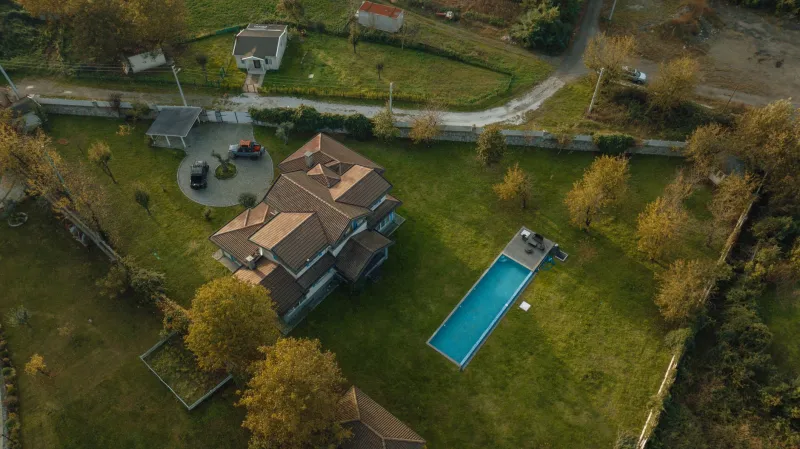
For generations, the American ideal of home carried with it a certain permanence — a brick-and-mortar declaration of arrival, stability, and social standing. The estate in Greenwich. The penthouse overlooking Central Park. The Nob Hill townhouse with its polished brass fittings. These were not merely dwellings; they were biographical statements. Yet among the country's most quietly influential class, that ideal is being systematically retired.
What has emerged in its place is something far more considered: a seasonal migration circuit, thoughtfully assembled across climates, communities, and hemispheres, that reflects not where one happens to live, but how one has chosen to live. Geography, for this cohort, has become less a circumstance than a discipline.
From Fixed Address to Living Portfolio
The shift is not accidental, nor is it driven solely by tax strategy — though that dimension is never entirely absent from the conversation. What animates it, at its core, is a fundamental recalibration of what constitutes a meaningful life at the highest levels of affluence.
Consider the logic: a single address, however distinguished, limits one to a single social ecosystem, a single climate, a single rhythm. The individual who winters in Palm Beach, retreats to the Berkshires through summer, maintains a working base in Manhattan during the productive months of autumn, and spends a portion of each year in the Swiss Alps or the Amalfi Coast does not merely accumulate properties. They curate a living experience of extraordinary breadth — one that exposes them to distinct intellectual communities, cultural environments, and professional networks that no single city, however world-class, could provide.
This is the essential philosophy that distinguishes strategic seasonal migration from ordinary vacation travel. The latter is an interruption. The former is a design principle.
The Architecture of a Well-Assembled Circuit
Those who have mastered this mode of living tend to approach their geographic portfolios with the same rigor they bring to investment decisions. Each residence serves a distinct function. There is the winter anchor — typically warm, social, and conducive to the particular form of relaxed intimacy that cold-weather escapes like Palm Beach, Montecito, or Scottsdale cultivate so naturally. There is the summer retreat, often characterized by natural beauty, privacy, and a slower cadence: coastal Maine, the Hamptons, Montana's Yellowstone Club corridor, or the quieter reaches of Lake Geneva.
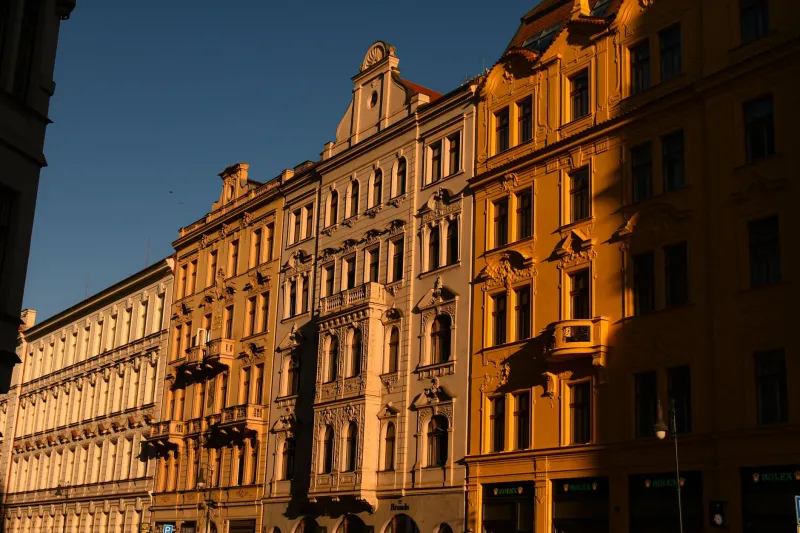
The urban base — New York, Washington, Chicago, or San Francisco, depending on one's professional gravity — serves as the command center, the address from which consequential work radiates outward. And increasingly, a fourth node is being added: the international residence, not a vacation home in any conventional sense, but a genuine foothold in another civilization's rhythm. London remains perennially favored. So does the south of France, the Côte d'Azur, and, among a newer generation, certain enclaves in Portugal and Japan.
Each node on the circuit is selected not merely for its beauty or prestige, but for the quality of the community it convenes. The most discerning practitioners of this lifestyle are explicit on this point: the property itself is secondary. The question that matters is who else has assembled in that place, during that season, and whether the resulting social environment is worth one's most finite resource — time.
The Communities That Crystallize Around the Circuit
One of the more remarkable consequences of this migration pattern is the emergence of what might be called seasonal micro-societies — concentrated gatherings of like-minded individuals whose paths converge predictably, year after year, within specific geographies and windows of time. These are not accidental communities. They are, in the most precise sense, curated ones.
The winter social season in Palm Beach has long operated on this logic, as has the summer colony structure of the Hamptons. What is newer is the deliberate intentionality with which the current generation approaches these convergences. Membership in the right clubs — whether the Bath and Tennis in Palm Beach, the Maidstone in East Hampton, or the more discreet private dining rooms that define Manhattan's professional elite — is understood not as a social nicety but as infrastructure. It is the mechanism through which the seasonal circuit becomes genuinely generative rather than merely pleasant.
At Acropolis Club, this understanding is foundational. The most enduring value of exclusive membership has never resided solely in the amenities or the address. It resides in the quality of the individuals one encounters — and re-encounters — across years and seasons. The circuit, when properly assembled, ensures that those encounters happen not by chance but by design.
The Logistical Discipline Required
It would be dishonest to romanticize this lifestyle without acknowledging its considerable demands. Managing multiple residences across time zones and regulatory environments requires a support infrastructure of genuine sophistication. Estate managers, personal legal counsel familiar with multi-state domicile questions, household staffing agencies capable of operating across geographies, and concierge services with the institutional memory to maintain continuity — all of these are prerequisites, not luxuries.
The administrative complexity alone is substantial. Property taxes, domicile declarations, staff coordination, maintenance calendars, and the perpetual question of where one's most important possessions should reside at any given moment: these are not trivial concerns. The most accomplished seasonal migrants typically employ a principal household manager whose sole function is to ensure that each residence is operational, stocked, and personally calibrated to the owner's preferences before their arrival.
What separates those who execute this model elegantly from those who merely attempt it is, in large measure, the quality of the professional network supporting them. The right advisors — legal, financial, logistical — transform an otherwise complicated existence into something that functions with the quiet efficiency of a well-run institution.
A New Definition of Rootedness
Perhaps the most counterintuitive aspect of this phenomenon is that it does not produce rootlessness. Those who have built genuine seasonal circuits report, with some consistency, a heightened rather than diminished sense of belonging — precisely because belonging, for them, has been redefined. It no longer inheres in a single place. It inheres in a set of relationships, communities, and rituals that reconvene reliably across seasons and years.
The Acropolis ideal — that excellence convenes in certain places, among certain people, at certain moments — finds its geographic expression here. Home, for this cohort, is not an address. It is a constellation of environments, each chosen with care, each offering something the others cannot, and all of them bound together by the continuous thread of a life lived with uncommon intentionality.
In that sense, the seasonal portfolio is not a departure from the concept of home. It is its most sophisticated elaboration.