The Cartography of Distinction: Why America's Most Discerning Individuals Are Staking Claims in Unexpected Places
For generations, the geography of American ambition followed a predictable contour. New York commanded finance and culture. Los Angeles held creative dominance. San Francisco claimed the future. To belong to the uppermost tier of influence, one was expected to plant roots—or at minimum, maintain a meaningful presence—within these established corridors of power. The map was fixed, and deviation from it read as either naivety or irrelevance.
That map is being redrawn.
Across the country, a deliberate and discerning class of high-net-worth individuals is establishing footholds in places that, until recently, rarely appeared on the radar of serious wealth. Charleston, South Carolina. Santa Fe, New Mexico. Bentonville, Arkansas. Greenville, South Carolina. Tulsa, Oklahoma. These are not consolation prizes for those priced out of coastal markets. They are, increasingly, the deliberate choices of individuals who understand that true distinction lies not in following the crowd, but in arriving before it.
The Tastemaker's Advantage
At the Acropolis Club, we have long observed that the most enduring markers of status are not those purchased from a catalog of established symbols, but those recognized only in retrospect. The collector who acquired Basquiat before the auction houses took notice. The investor who committed to a neighborhood before the first boutique hotel opened. The traveler who discovered a coastal village before the travel magazines arrived.
Geographic pioneering operates on the same principle. To establish a meaningful presence in a city or region before it becomes conventionally desirable is to exercise a form of cultural foresight that no amount of money can simply purchase after the fact. It requires genuine discernment—an ability to read the subtle signals of a place's emerging character and commit to that vision before consensus forms.
This is precisely what distinguishes the current wave of geographic diversification from mere relocation. These individuals are not fleeing their primary markets. They are expanding their cartography of belonging, adding dimensions to their identity that a Manhattan address alone could never provide.
Cities That Reward the Discerning Eye
Consider Charleston. For decades, it occupied a pleasant but peripheral position in the national imagination—a city of considerable historical charm and gracious hospitality, admired but not coveted by those at the apex of American influence. That perception has shifted with notable velocity. A sophisticated culinary scene anchored by chefs of genuine national standing, a visual arts community with growing institutional ambition, and an architectural heritage that no amount of new development can replicate have combined to make Charleston one of the most quietly compelling destinations in the American South.
Those who established primary or secondary residences there five years ago did not do so because Charleston had arrived. They did so because they recognized the conditions under which arrival becomes inevitable.
Santa Fe presents a different but equally instructive case. The city has long attracted a certain artistic temperament, its light and landscape drawing painters and sculptors for well over a century. What has changed is the caliber and diversity of the individuals now choosing it as a serious base of operations. Technology executives, private equity principals, and prominent philanthropists have discovered in Santa Fe not a retreat from consequence, but a different theater in which to exercise it. The city's world-class arts infrastructure—anchored by institutions such as the Georgia O'Keeffe Museum and the Santa Fe Opera—provides cultural scaffolding that rewards sophisticated engagement rather than merely passive appreciation.
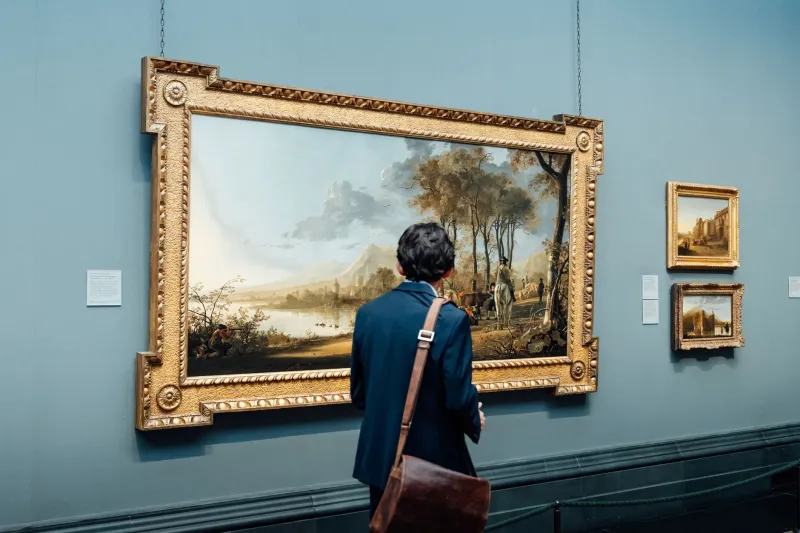
Meanwhile, Bentonville has emerged as perhaps the most surprising entry on this evolving list. The presence of Crystal Bridges Museum of American Art—an institution whose collection would distinguish any major metropolitan center—has catalyzed a broader cultural and culinary awakening that has drawn serious attention from individuals who might once have dismissed the Arkansas Ozarks without a second thought. The lesson of Bentonville is not merely that great art can exist anywhere, but that it can transform the social and economic character of a place with remarkable speed when the foundational commitment is genuine.
What This Migration Reveals About Status Itself
The deeper significance of this geographic shift extends beyond real estate strategy or lifestyle preference. It reflects a fundamental evolution in how the most discerning Americans conceptualize and communicate their standing.
The old model of status was largely additive and legible. One accumulated the right address, the right club membership, the right institutional affiliations, and arranged them in a recognizable configuration that others could immediately decode. Status operated as a shared language with a relatively stable vocabulary.
The emerging model is more fluid, more personal, and considerably more difficult to imitate. When a prominent figure establishes a meaningful presence in a city that has not yet been ratified by conventional taste-making institutions, they are not simply acquiring a property. They are making a statement about the quality of their own judgment—a statement that cannot be validated until time proves them correct.
This is status as conviction rather than conformity. And in circles where conformity is the easiest thing in the world to purchase, conviction has become extraordinarily rare.
The Art of Arriving Before the Announcement
For those who aspire to exercise this form of geographic discernment, the operative challenge is developing the perceptual acuity to recognize a place's potential before it becomes self-evident. Several conditions tend to precede meaningful transformation: the arrival of a serious cultural institution with genuine ambition; sustained investment by a small number of individuals with both resources and genuine civic commitment; the emergence of a culinary scene that reflects local character rather than simply importing metropolitan trends; and a physical environment—architectural, natural, or both—that rewards sustained attention.
No algorithm reliably identifies these convergences before they crystallize. The judgment required is fundamentally humanistic, drawing on a cultivated sensitivity to place, history, and the subtle dynamics of community formation. It is, in the most precise sense, a matter of taste.
At the Acropolis Club, we recognize that the geography of belonging has always been more complex than the conventional map suggested. The most interesting lives are rarely lived entirely within the coordinates that others have pre-approved. The individuals who understand this—who possess both the confidence and the discernment to stake claims in places not yet ratified by consensus—are not departing from the tradition of excellence. They are, in the deepest sense, embodying it.