Patrons of the New Pantheon: How Private Collectors Are Quietly Redrawing the Map of American Culture
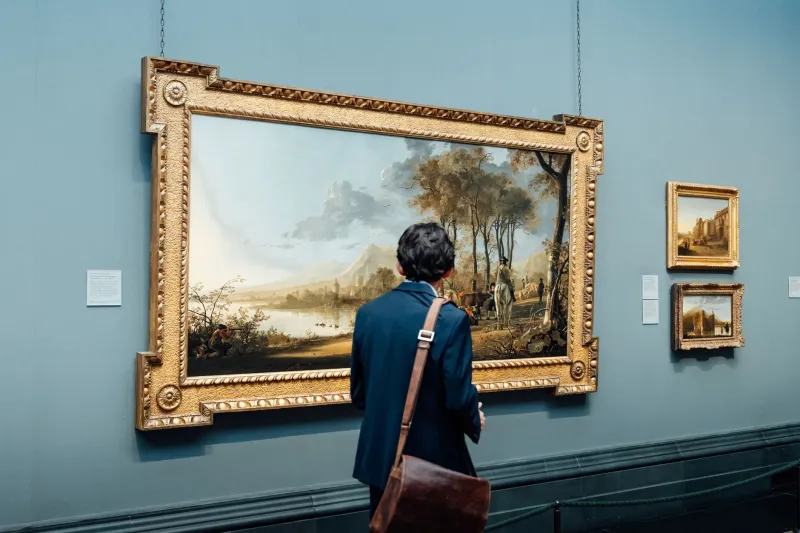
There is a particular kind of power that announces itself in whispers rather than declarations. It does not appear on organizational charts or in press releases. It is exercised in the hour before a museum opens to the public, when a private collector walks unhurried through galleries that belong, in every meaningful sense, to the institution — and yet feel, unmistakably, like home.
Across the United States, from the marble corridors of New York's Metropolitan Museum of Art to the sun-drenched pavilions of the Getty Center in Los Angeles, this quiet authority is being exercised with increasing sophistication. America's most accomplished collectors are no longer content to acquire masterpieces in isolation. They are reshaping the very institutions that contextualize, legitimize, and ultimately define cultural value.
The Board Seat as Canvas
For decades, philanthropic giving to cultural institutions followed a relatively straightforward script: a donor contributed funds, received naming rights to a gallery or wing, and enjoyed a measure of social prestige commensurate with the size of the gift. That arrangement, while still prevalent, now represents only the most visible layer of a far more intricate relationship.
The true currency of influence today is the board seat. Across America's premier cultural institutions, trustee positions are among the most carefully negotiated appointments in any sector — more consequential, some argue, than comparable roles in corporate governance. A trustee at a major American museum does not merely attend quarterly meetings. They shape acquisition strategies, determine the institutional appetite for risk, influence curatorial appointments, and, in many cases, serve as the decisive voice on which traveling exhibitions the institution chooses to pursue.
What makes this influence particularly remarkable is its discretion. Unlike political power or corporate authority, cultural stewardship carries an aesthetic dimension that insulates it from conventional scrutiny. A collector who influences a museum's acquisition of a particular artist is simultaneously advancing their own collection's prestige — yet this alignment of private interest and public benefit is rarely examined with the rigor it might deserve.
The Private Preview as Social Architecture
Perhaps the most coveted expression of this new cultural patronage is access — specifically, access to works and experiences that exist entirely outside the public's reach.
Behind-the-scenes previews of major exhibitions, private conservation tours, and after-hours viewings in the company of curators and directors have become defining features of the most sophisticated membership propositions in American cultural life. These experiences do not merely offer aesthetic pleasure; they confer a form of knowledge — an intimacy with objects and ideas — that cannot be purchased through general admission.
For members of America's most exclusive collecting circles, an invitation to view a newly restored Old Master in the conservation studio, weeks before the work is unveiled to the public, is not simply a privilege. It is a statement of position — a confirmation that one occupies a place within the institutional inner circle where culture is made, rather than merely consumed.
This distinction matters enormously to those who inhabit it. The difference between attending an opening gala and being present at the private curatorial briefing that precedes it is the difference between witnessing history and shaping it.
Philanthropy as Aesthetic Vision
Not all collector-patrons are motivated primarily by social positioning. A significant cohort approaches institutional engagement as an extension of their collecting philosophy — a means of ensuring that the works they have spent decades acquiring are understood within the context they believe those works deserve.
This impulse has produced some of the most transformative gifts in American museum history. When collectors endow curatorial chairs, fund conservation laboratories, or underwrite scholarly catalogues, they are making an argument — about which artists matter, which periods deserve sustained attention, which cultural narratives warrant institutional validation.
The influence this confers is both immediate and generational. A collection gifted to a major American institution does not simply enter the permanent collection; it shapes the institution's identity for decades, influencing the research questions curators pursue, the educational programs educators design, and the interpretive frameworks through which future visitors encounter the work.
The Ethics of Aesthetic Authority
This concentration of cultural influence in private hands is not without its critics. Scholars, curators, and cultural commentators have raised substantive questions about the degree to which philanthropic power can distort institutional priorities — steering museums toward the tastes and interests of their wealthiest patrons rather than toward the broadest possible public benefit.
These are not trivial concerns. Institutions that depend heavily on major donors for operating revenue may find it difficult to mount exhibitions or pursue acquisitions that conflict with the aesthetic or ideological preferences of their most influential trustees. The result, critics suggest, is a cultural landscape shaped less by scholarly consensus or democratic appetite than by the refined but nonetheless particular tastes of a very small number of individuals.
Proponents of the current model counter that private patronage has always been the engine of cultural ambition — that the Medici did not consult a public committee before commissioning Botticelli, and that the greatest American museums were built not by government mandate but by the visionary generosity of private citizens willing to stake both their fortunes and their reputations on the enduring value of art.
Where Excellence Leaves Its Mark
The most thoughtful collector-patrons understand that lasting cultural influence is not measured in gallery nameplates or gala invitations. It is measured in the quality of the conversations their gifts make possible — the graduate student who pursues a research question unlocked by a newly accessible collection, the young artist whose work is transformed by an encounter with a masterpiece that might otherwise have remained in private hands.
At its finest, the relationship between private collecting and public institutions is genuinely symbiotic: the collector brings passion, resources, and an uncompromising eye; the institution brings scholarly rigor, public accountability, and the permanence that private ownership can never quite guarantee.
The patrons who navigate this relationship with the greatest sophistication are those who approach it not as an exercise in prestige acquisition, but as a form of stewardship — an acknowledgment that the works they have gathered during their lifetimes belong, in some essential sense, to a conversation larger than themselves.
In this, they embody a principle that has always distinguished genuine cultural leadership from mere collecting: the understanding that the most enduring mark one can leave on a civilization is not ownership, but contribution.