The Art of Less: How America's Most Discerning Minds Have Made Curation the Highest Form of Status
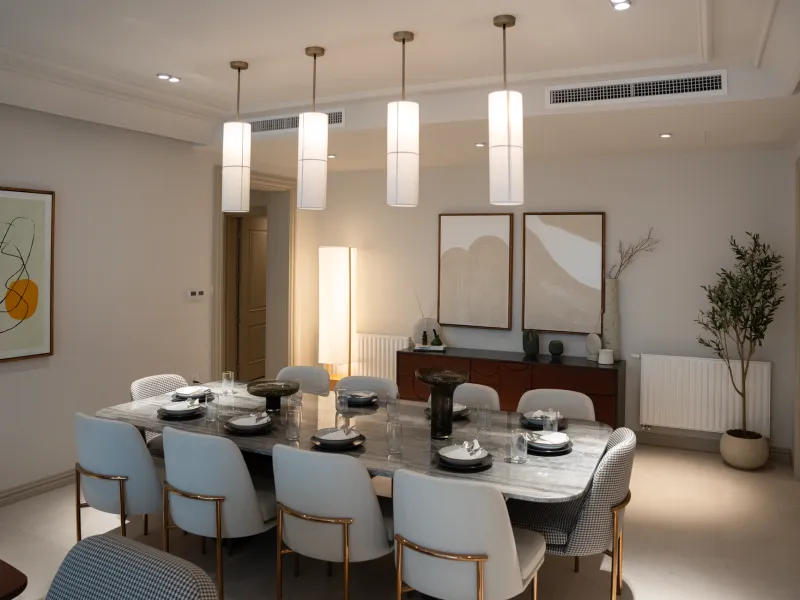
There is a particular quality of restraint that separates the merely wealthy from the genuinely refined. Walk through the residence of a true connoisseur and you will notice, above all else, what is absent. No crowded gallery walls. No trophy-room accumulation of branded possessions. What remains has been chosen with a precision that borders on the surgical—and that precision, more than any price tag, is what announces the inhabitant's standing to those capable of reading the signal.
Across America's most rarefied social circles, curation has quietly supplanted consumption as the defining marker of cultural authority. The shift did not happen overnight, nor was it announced in any publication. It emerged, as so many consequential changes do among the elite, through a collective and largely unspoken consensus: that in an age of virtually unlimited resources, the ability to say no is infinitely more impressive than the capacity to say yes.
The Psychology of the Edited Life
Behavioral economists have long understood that choice, beyond a certain threshold, ceases to be liberating and becomes burdensome. What the most discerning Americans have grasped—often intuitively rather than analytically—is that this principle applies with particular force to the public display of taste. An undifferentiated abundance of fine things communicates not sophistication, but an inability to discriminate. The collector who owns four hundred works of art and the collector who owns eleven share no common cultural language.
The psychological architecture of elite curation rests on three distinct pillars: knowledge deep enough to justify exclusion, access rare enough to make selection meaningful, and the confidence to resist the social pressure of acquisition. That last quality is, perhaps, the most demanding. In environments where peers are constantly presenting new opportunities—a limited-edition commission here, a private vineyard allocation there—the willingness to decline requires a security of identity that most people, regardless of net worth, never fully develop.
Those who have developed it describe the sensation in similar terms: a kind of clarity. When a New York-based private equity principal who collects only works by living American ceramicists declines a Basquiat offered at private sale, she is not making a financial calculation. She is affirming an identity. The Basquiat, however extraordinary, does not belong to her story. That coherence of vision is precisely what separates a collection from an accumulation.
The Gatekeepers Nobody Discusses
Behind every cultivated eye stands a network of advisors whose names rarely surface in any public context. These are not the branded art consultants who appear in magazine profiles or the hospitality designers who accept speaking invitations at industry conferences. The advisors who genuinely shape elite taste operate with a discretion that is itself a credential.
In the art world, a handful of independent scouts—many of them former museum curators or gallery directors who stepped quietly out of institutional life—maintain relationships with a small roster of clients built entirely on personal trust. They do not advertise. They do not maintain websites. A client relationship typically begins through a single introduction from an existing client, and the scout's value lies not in what they surface, but in what they decline to bring forward. The ratio of works seen to works presented can run as high as fifty to one.
Similar dynamics govern bespoke travel. The itineraries that circulate among America's most selective travelers bear no resemblance to the luxury travel content that populates premium publications. These are journeys assembled around singular access: a private audience with a master lacquerware artisan in Kyoto whose workshop accepts no commercial visitors, a research vessel expedition to a marine reserve that receives fewer than thirty guests annually, a harvest-season stay at a Burgundy domaine whose proprietor hosts no more than two families each year. The architects of these experiences—often operating under deliberately ambiguous professional titles—derive their authority entirely from the relationships they have spent decades cultivating and carefully protecting.
Connoisseurship as Conversation
One of the less-examined functions of refined taste is its role as a social instrument. Among individuals who have largely transcended the conventional markers of success, shared aesthetic sensibility becomes one of the primary languages through which genuine connection is established. The recognition that another person has read the same obscure Venetian art historian, or has visited the same remote Japanese inn that accepts reservations only through personal introduction, functions as a form of authentication that no credential or title can replicate.
At gatherings hosted through Acropolis Club, this dynamic is particularly visible. Conversations that begin around a single object—a quietly extraordinary piece of studio glass, an unusual wine from a producer most guests have never encountered—reveal themselves to be conversations about judgment, about the long cultivation of an informed perspective. These exchanges carry a weight that purely transactional networking never achieves. They are, in the truest sense, meetings of curated minds.
The implications extend into professional life as well. Research into decision-making among senior executives consistently suggests that individuals known for exceptional aesthetic discrimination are perceived as more trustworthy in contexts of consequential judgment. The logic is not irrational: a person who has developed the patience, knowledge, and self-assurance required to curate with genuine distinction has demonstrated capacities that transfer directly to the boardroom.
The Discipline of the Considered No
For those beginning to cultivate a more intentional relationship with acquisition—whether of objects, experiences, or affiliations—the practitioners of elite curation offer a consistent piece of counsel: establish the principle before the opportunity arrives.
The collector who has decided, in advance, that her collection concerns itself exclusively with post-war American studio furniture does not agonize when an extraordinary Ming dynasty scholar's rock is offered to her at a favorable price. The decision has already been made, not in that moment, but through the prior act of defining what her collection is about. The discipline is not reactive; it is architectural.
This same logic applies to travel, to social commitments, to the cultivation of professional relationships. The most admired figures in any rarefied circle are those whose choices, over time, reveal a legible vision—a coherent point of view about what matters and what does not. That coherence is not born of limitation. It is the product of an active, ongoing, and deeply considered engagement with the question of what one truly values.
In a culture that continues to celebrate abundance, that question remains quietly radical. And the willingness to answer it honestly, and to live by the answer, remains the most reliable mark of a genuinely cultivated mind.