Uncharted and Uncompromised: How America's Most Discerning Travelers Are Abandoning the Familiar Luxury Circuit
There was a time when the right address was sufficient. A particular resort in the Maldives, a storied villa on the Amalfi Coast, a private lodge in Montana's Beartooth Range—these names carried weight precisely because they were known within the correct circles. Recognition was the reward. To have been there was to have demonstrated both the means and the taste to arrive.
That calculus has shifted considerably. Among the most discerning segment of American wealth, recognizability has become a liability rather than an asset. When a property appears in the right publications, earns the right endorsements, and circulates on the right social platforms—even among ostensibly private audiences—it ceases to function as a refuge. It becomes, instead, another venue on a shared itinerary. And shared itineraries, by definition, offer no sanctuary.
What is replacing the familiar luxury circuit is something harder to name and considerably harder to find.
The Retreat from the Recognizable
The shift is not merely aesthetic. It reflects a deeper recalibration of what exclusivity is meant to accomplish. For individuals whose professional lives demand constant visibility, whose social obligations are extensive, and whose movements are subject to varying degrees of public attention, the purpose of a private refuge is not comfort alone—it is genuine disconnection. Not the performative kind, where one retreats to a celebrated destination and documents the retreat, but the structural kind, where the destination itself resists documentation.
This demand has given rise to a new class of sanctuary: properties and experiences that are not marketed, not reviewed, and not accessible through conventional booking channels. They exist, instead, within networks of personal introduction—arrangements brokered by trusted intermediaries, estate managers, or members of the same private clubs and advisory circles that govern so many other aspects of elite American life.
The Acropolis Club has observed this pattern with some consistency among its own membership. The question of where one actually goes—not where one is seen to go—has become one of the more candid and consequential conversations within the club's private rooms.
Geography as Credential
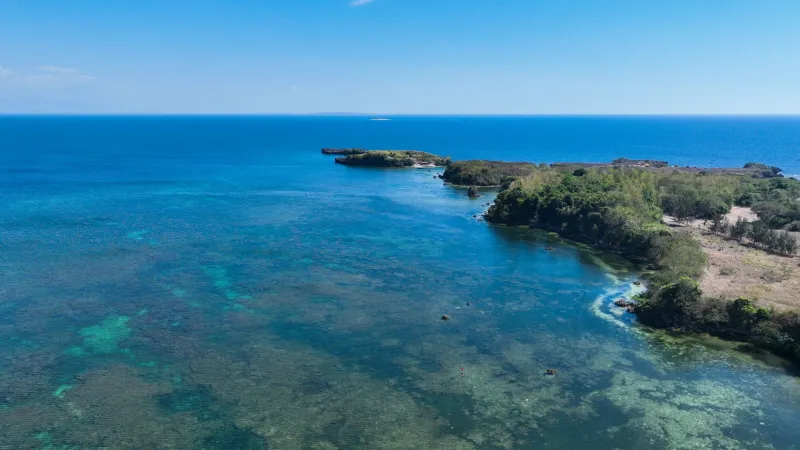
What distinguishes the new geography of escape is that its credentials are inherently non-transferable. A bespoke private island arrangement in the outer Bahamian chain, a restored estancia accessible only by private aircraft in a region of Patagonia that does not appear on tourist maps, a remote wellness compound in the high desert of New Mexico whose proprietors accept guests by referral only—these are not experiences that can be replicated by anyone with sufficient funds and a competent travel agent. They require something more elusive: access to the right conversation at the right moment.
This inaccessibility is, of course, precisely the point. The location itself becomes a form of social currency—not because it can be displayed, but because it cannot. The individual who has spent a fortnight at such a property carries the knowledge quietly, sharing it only when the context warrants. The act of withholding is as meaningful as the act of disclosure.
Geography, in this sense, has become a credential in its own right. Not the geography of famous places, but the geography of places that remain, by design and by effort, genuinely obscure.
The Architecture of True Disconnection
Beyond location, the most sought-after private refuges share a common structural characteristic: they are designed to eliminate the conditions that make disconnection difficult. This goes considerably further than removing Wi-Fi or enforcing a no-devices policy. It involves the deliberate construction of an environment in which the pressures of professional identity, social performance, and public accountability simply cannot gain purchase.
Some of these properties achieve this through physical remoteness alone. Others layer in programming—whether wellness-oriented, intellectually focused, or entirely unstructured—that creates an alternative rhythm incompatible with the pace of ordinary life. Still others derive their power from the specific composition of their guest population: small enough to feel intimate, carefully curated enough to feel safe.
The most sophisticated operators in this space understand that what they are selling is not a location or an amenity package. They are selling the conditions under which a particular kind of person can, perhaps for the first time in months, exhale fully.
When Curation Replaces Branding
The commercial implications of this shift are significant. The traditional luxury hospitality model—built on brand recognition, aspirational marketing, and the accumulation of visible prestige—is poorly suited to serving a clientele that has moved beyond aspiration into something more private and more particular.
What is emerging in its place is a curation model, in which the value proposition rests entirely on the judgment of a trusted intermediary rather than the reputation of a brand. The most effective of these intermediaries—whether they operate as private travel architects, estate consultants, or simply as well-connected individuals within the right networks—function less like travel agents and more like editors. Their authority derives not from inventory, but from discernment.
For the members of institutions like the Acropolis Club, this distinction is immediately legible. The difference between a curated recommendation and a marketed offering is felt, not merely understood. It is the difference between a suggestion made in confidence and an advertisement dressed in the language of exclusivity.
The Permanent Address of Impermanence
Perhaps the most telling aspect of this evolution is what it suggests about the relationship between place and identity among America's most accomplished individuals. The fixed luxury address—the second home in a celebrated enclave, the annual pilgrimage to a storied resort—implied a certain continuity of self. One returned because the place confirmed something about who one was.
The new geography of escape implies something quite different. It suggests that identity, at this level, is no longer in need of external confirmation. The destination need not be known. It need not be repeatable. It need not be anything other than precisely what is needed, at this particular moment, by this particular person.
That is, in its own way, the most refined form of luxury yet devised: a refuge so personal that it could not have been imagined by anyone else, and so well-protected that it will never need to be explained.