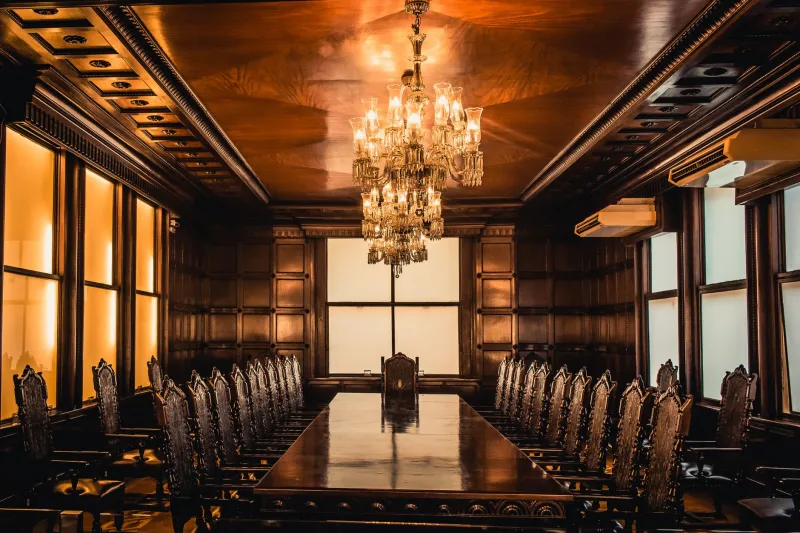
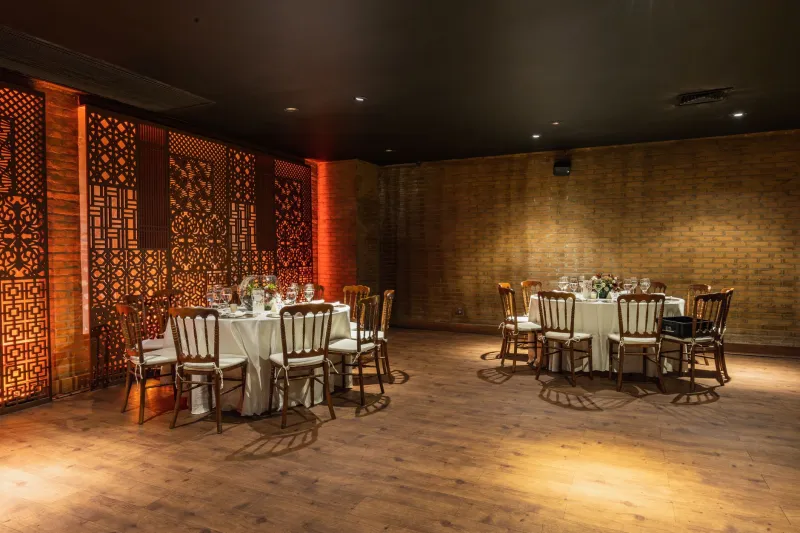
Tradition Under Revision: How America's Most Storied Private Clubs Are Quietly Reinventing Their Own Standards

For well over a century, the architecture of the American private club has rested on a single, load-bearing premise: that scarcity, when properly administered, is its own form of prestige. The waiting list was not merely a logistical inconvenience — it was a message. Membership was not awarded; it was conferred. And the rules governing that conferral were, by design, opaque, idiosyncratic, and fiercely resistant to outside scrutiny.
That architecture is not crumbling. But it is, in the most deliberate and carefully managed ways, being renovated.
Across the United States, from the historic dining clubs of the Northeast to the private equity-adjacent social institutions of San Francisco and the quietly influential membership societies of Chicago and Dallas, gatekeepers are doing something they have rarely been called upon to do: they are looking inward, and asking whether the standards they have preserved so faithfully still serve the purposes for which they were originally designed.
The Paradox of Preserved Irrelevance
The central dilemma facing America's most exclusive clubs is not one of demand. If anything, appetite for membership in elite private institutions has intensified over the past decade, driven in part by the collapse of reliable public third spaces and the growing premium placed on curated, high-trust environments. The waiting lists at certain clubs remain measured not in months but in years — sometimes in generations.
The problem, rather, is one of composition. Institutions that once drew their membership almost exclusively from a narrow band of inherited wealth, Ivy League affiliation, and geographic proximity to established power centers are now confronting a more complicated reality. The individuals generating the most significant cultural, financial, and intellectual capital in contemporary America do not always arrive through the traditional channels. They may be younger than the membership median by two decades. They may have built their influence in industries — technology, venture capital, entertainment, global finance — that did not exist when the club's founding charter was written. And they may carry a set of values and expectations that sit in productive tension with the institution's historical identity.
The question facing club leadership is therefore not whether to open the door, but precisely how wide, and to whom, and under what terms.
The Quiet Architecture of Change
What is striking about the adjustments being made at the highest levels of American club culture is how deliberately they resist the appearance of adjustment. The most sophisticated institutions understand that visible reform carries its own risks. A club that announces its evolution too loudly signals insecurity. A club that appears to be chasing relevance has, by definition, already lost a measure of it.
The changes, accordingly, tend to arrive through institutional channels that attract little external attention. Membership committees are reconstituted with a broader generational and professional range. Sponsorship requirements — historically among the most exclusionary mechanisms, given their reliance on existing member networks — are quietly restructured to allow for alternative pathways. Programming is expanded to include disciplines and conversations that reflect the intellectual preoccupations of a new leadership class, without displacing the traditions that give the institution its gravitational weight.
At some clubs, the most significant changes have been structural rather than cultural. The introduction of tiered membership categories — distinguishing between full social membership, professional affiliate status, and purpose-specific access — has allowed certain institutions to extend their reach without diluting their core identity. A founding member dining in the main room need not be aware that a parallel membership tier exists for a younger cohort convening in a separate wing for an entirely different kind of conversation.
The Generational Negotiation
Perhaps no single variable is reshaping the private club landscape more consequentially than the generational transfer of wealth and influence currently underway in American society. As the children and grandchildren of legacy members come of age, they bring with them a set of priorities that do not always align seamlessly with the institutions they are inheriting. They are, on the whole, less impressed by the club's history and more interested in its present utility. They expect the physical environment to reflect contemporary standards of design and service. They are less tolerant of institutional inertia and more likely to disengage — or simply not engage at all — if the club fails to meet them where they are.
This dynamic has forced club leadership into a negotiation that is as much diplomatic as it is strategic. Long-tenured members who regard the club's traditions as foundational — not merely sentimental — must be convinced that evolution serves preservation rather than undermining it. Younger prospective members must be persuaded that the institution's history is an asset rather than an obstacle. Threading that needle requires a quality that the most effective club administrators share with the most effective institutional leaders in any field: the ability to make change feel like continuity.
Demographic Gravity and the Question of Composition
Beyond generational dynamics, America's most exclusive clubs are navigating demographic shifts that carry both cultural and reputational dimensions. Institutions that once reflected a remarkably homogeneous membership profile are increasingly aware that this homogeneity, historically invisible to those within it, has become conspicuous to those outside it — and, more importantly, to a growing number of prospective members whose participation the club genuinely requires in order to remain relevant.
The response has been uneven across the landscape. Some institutions have moved with genuine intentionality, recognizing that a membership that more accurately reflects the actual composition of American excellence is not a concession to external pressure but a logical extension of the club's own stated values. Others have moved more cautiously, wary of the perception that standards are being adjusted rather than applied more broadly. A small number have resisted substantively, and are paying a price in the form of a membership profile that grows older and more insular with each passing year.
What the most sophisticated institutions understand — and what the Acropolis Club has always held as foundational — is that exclusivity is not a fixed quantity. It is a quality that must be actively maintained, and that maintenance requires the continuous exercise of discernment: the willingness to ask, in each generation, what genuine excellence looks like, and to build the institutional mechanisms necessary to recognize and attract it.
The Standard That Endures
For all the adaptation underway, the most enduring private clubs share a commitment that no amount of structural revision can substitute for: a clarity of purpose that members feel from the moment they enter. The physical environment, the quality of service, the intellectual tenor of the conversation, the unspoken but palpable sense that everyone present has earned their place — these remain the irreducible elements of genuine exclusivity.
The clubs that will emerge from the current period of transition most powerfully are not those that have resisted change or those that have pursued it most aggressively. They are those that have understood change as a form of discipline — as rigorous, in its own way, as the standards they apply at the door. In that sense, the gatekeepers' most demanding task has never been keeping people out. It has always been ensuring that what lies within remains genuinely worth entering.