The New Power Meridian: Why America's Most Influential Figures Are Planting Flags Beyond New York and Los Angeles
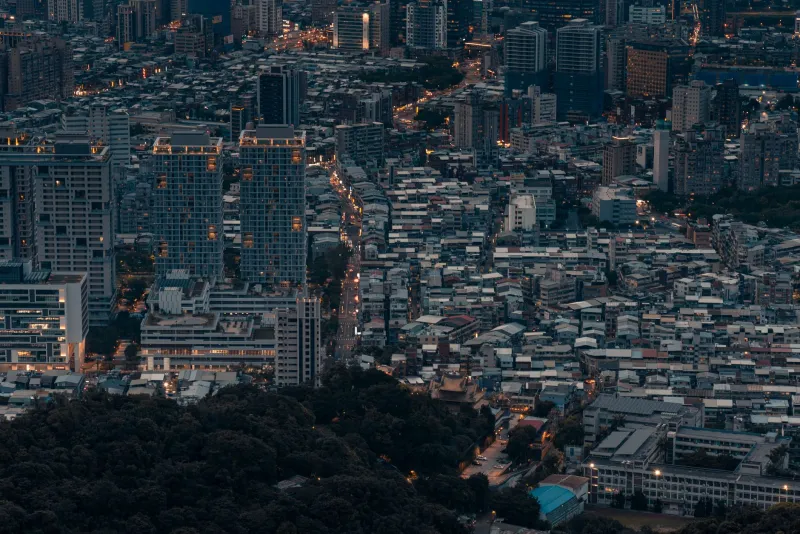
For generations, the geography of American ambition was largely fixed. Power resided in Manhattan penthouses, Bel Air estates, and the corridors connecting them. To matter was to be present in those specific latitudes. Yet something fundamental has shifted. Across the country, a discreet but unmistakable migration is underway—one that is quietly redrawing the map of where influence is made, held, and exercised.
The individuals driving this shift are not fleeing prestige. They are pursuing a more sophisticated version of it.
From Crowded Summits to Open Terrain
New York and Los Angeles remain formidable. Their institutions, their media ecosystems, their density of talent—none of that has evaporated. But for the truly accomplished, these cities have become something they never were before: crowded. When every block hosts a billionaire and every dinner table seats a household name, the capacity to distinguish oneself—to shape a room, a conversation, an institution—diminishes considerably.
The calculus has changed. In a city of ten thousand high-net-worth individuals, even extraordinary wealth confers only marginal influence. The competitive friction is relentless, the attention fragmented. A philanthropic gift that would transform a mid-sized city's cultural landscape may barely register in New York's donor ecosystem.
This is precisely the arbitrage that discerning individuals are now exploiting. Cities like Nashville, Austin, Miami, Denver, Charleston, and Scottsdale have matured rapidly—not merely as lifestyle destinations, but as genuine arenas of civic, cultural, and commercial consequence. For those with the vision to recognize it, they represent terrain where a relatively modest investment of time, capital, and social energy yields outsized returns in the currency that matters most: meaningful authority.
The Strategic Logic of the Second City
Members of the Acropolis Club understand instinctively what many observers are only beginning to articulate: that influence is not merely a function of proximity to existing power structures, but of the ability to shape the structures themselves. In cities still consolidating their identity—still determining which institutions will define them, which cultural voices will carry weight, which philanthropic priorities will endure—an arriving figure of substance can do something nearly impossible in New York: become foundational.
Consider the dynamics at play. A former Wall Street executive relocating to Nashville does not simply join an existing ecosystem; she enters one that is actively seeking leadership. Museum boards, symphony endowments, university advisory councils, and civic planning bodies in these cities are not merely looking for names—they are looking for architects. The opportunity to shape, rather than merely participate, is qualitatively different and, for many, far more compelling.
This dynamic also extends to the business environment. Secondary cities frequently offer regulatory climates, tax structures, and commercial real estate markets that reward capital deployment in ways that coastal metros no longer can. The combination of personal quality of life, lower operational friction, and elevated civic standing creates a proposition that is, on reflection, not secondary at all.
Discretion as Geography
There is another dimension to this migration that rarely surfaces in mainstream coverage, yet resonates deeply among those who have navigated life at the highest levels of visibility: the relief of anonymity.
In New York or Los Angeles, the simply wealthy are indistinguishable from the spectacularly wealthy only to the initiated. But both groups exist within a media environment of relentless scrutiny, social performance, and status maintenance that is, for many, genuinely exhausting. The requirement to be seen—at the right events, in the right rooms, alongside the right people—becomes a form of labor that consumes energy better directed elsewhere.
The secondary city offers something the coastal metropolis cannot manufacture: the ability to move through the world without constant narration. A prominent family in Charleston occupies a position of genuine local distinction without the ambient pressure of competing against the global elite for social positioning. They are not invisible—far from it—but they operate on their own terms, in spaces they have helped to define.
This is a distinction the Acropolis Club has long recognized. True prestige is not the product of perpetual performance. It is the quiet confidence of those who have nothing left to prove to anyone but themselves.
The Infrastructure of Belonging
Critical to this migration is the rapid maturation of private infrastructure in these emerging markets. The assumption that leaving New York means forgoing access to exceptional dining, bespoke services, world-class medical care, or sophisticated social environments has been systematically dismantled over the past decade.
Nashville now hosts a culinary scene that commands national attention. Miami's arts infrastructure has attracted institutions and collectors of genuine international standing. Austin's technology and venture ecosystem has created a professional density that rivals, in specific sectors, anything Silicon Valley offers. Scottsdale and the broader Phoenix metropolitan area have developed private club and wellness environments that cater explicitly to relocated executives seeking the appointments of their former lives without the attendant compromises.
For families with children, the calculus is particularly compelling. Elite private school networks have expanded their footprints, and the physical environment—space, safety, access to nature—often surpasses what coastal cities can offer at any price point.
Reshaping the Institutions That Define a City
Perhaps the most consequential dimension of this migration is its long-term institutional impact. The individuals relocating to these cities are not passive residents. They are, in the most meaningful sense, investors—in civic life, in cultural institutions, in the social fabric of communities that are, in many cases, actively seeking their engagement.
Museums are being endowed. Performing arts centers are finding major donors. Universities are attracting board members with national networks and global perspectives. The effect is cumulative and, over time, transformative. The cities that successfully attract and retain this cohort will emerge from the next decade as genuine cultural capitals—not imitations of New York, but distinct centers of gravity in their own right.
For those who arrive early, the returns—social, civic, and reputational—are considerable. This is the essence of the move: not departure from influence, but its strategic relocation to ground where it can be exercised more fully, more lastingly, and on one's own terms.
The View from Higher Ground
At the Acropolis Club, we have always understood that the most consequential decisions made by our members are rarely the most visible ones. The choice of where to plant one's flag—where to invest one's presence, one's capital, and one's legacy—ranks among the most significant a person of means and ambition can make.
The migration to America's secondary cities is not a trend. It is a strategic reorientation by individuals who have mastered one arena and chosen, deliberately, to shape another. They are not leaving the summit. They are building a new one.