The New Medici Compact: How America's Ultra-Wealthy Are Engineering Cultural Legacy Through Strategic Patronage
In fifteenth-century Florence, the Medici family did not simply accumulate wealth. They deployed it as a form of cultural architecture—commissioning works, sustaining artists, and underwriting intellectual life in ways that permanently shaped Western civilization. Their names did not merely survive the centuries; they became synonymous with the very act of elevating human expression. It was, by any measure, the most sophisticated return on investment in recorded history.
Something recognizable is happening again, this time across the private estates, foundation offices, and curatorial suites of America's most discerning ultra-high-net-worth individuals. The mechanism is different. The ambition is strikingly familiar.
Beyond the Gala: The Limits of Conventional Philanthropy
For much of the twentieth century, American philanthropic culture operated on a relatively legible model. Wealth was directed toward established institutions—universities, hospitals, museums, symphonies—in exchange for naming rights, board seats, and the social currency that attaches to visible generosity. The system worked, in its fashion. It funded extraordinary things. It also produced a particular kind of donor: one whose influence was real but whose creative authority was circumscribed by the institutional structures they were supporting.
The most sophisticated members of today's wealth class have grown restless with that arrangement. They are not abandoning institutional giving—the checks to endowments and capital campaigns continue to be written. But alongside those conventional commitments, a growing number of individuals are constructing parallel philanthropic ecosystems that they control entirely: private foundations with narrow, idiosyncratic mandates; artist residency programs housed on personal properties; literary journals, architectural commissions, and documentary film initiatives funded and directed by a single principal.
The distinction matters enormously. When a donor contributes to an existing museum, they are amplifying an institution's vision. When they commission a body of work directly, they are expressing their own.
The Architecture of Private Patronage
The modern patronage model takes several distinct forms, each calibrated to a different set of cultural ambitions.
The most intimate is the direct artist relationship—an arrangement in which a patron provides sustained financial support to an individual creator in exchange for access, dialogue, and often a degree of creative influence. These relationships are rarely publicized. They operate through the kind of trust that takes years to establish and is not easily transferred. The artists involved gain something institutional grants rarely provide: time, stability, and a patron genuinely invested in the quality of the work rather than its institutional utility.
At a larger scale, private foundations have become the preferred vehicle for patrons whose ambitions extend to shaping entire fields rather than individual careers. Unlike public charities, private foundations afford their principals an unusual degree of programmatic autonomy. A foundation focused on, say, the preservation of vernacular American architecture or the commissioning of site-specific environmental art can pursue those objectives with a coherence and continuity that no committee-governed institution could sustain.
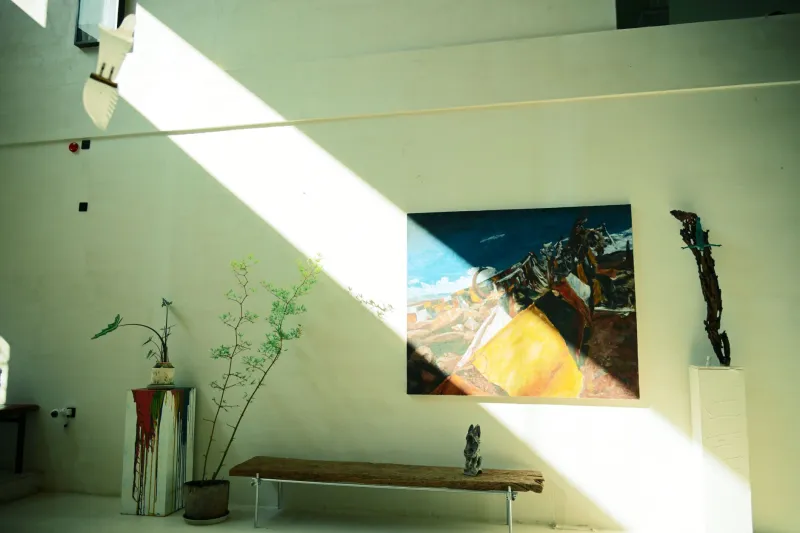
Perhaps the most architecturally ambitious form of modern patronage is the curated cultural campus—a physical environment, often anchored to a private estate or rural property, that functions simultaneously as residence, exhibition space, and intellectual gathering ground. Several of these initiatives, distributed across states including Vermont, New Mexico, and coastal Maine, have quietly become among the most significant sites of cultural production in the country, despite receiving almost no mainstream press attention. That obscurity is, in most cases, entirely intentional.
Soft Power and the Cultural Ledger
What distinguishes the most sophisticated practitioners of modern patronage from their more conventional counterparts is an explicit understanding of what they are building. They are not simply giving money away. They are constructing a cultural ledger—a body of work, a constellation of relationships, and a set of institutions that will carry their sensibility forward in ways that no financial bequest alone could accomplish.
This is soft power in its most refined form. The patron who has sustained a generation of poets, or who has underwritten the restoration of a neglected regional artistic tradition, or who has created the conditions under which a significant body of architectural thought was developed—that individual has shaped the culture in ways that are real, lasting, and deeply personal, without ever requiring a press release.
The social dimension is equally significant. Within the circles where these patrons operate, cultural authorship carries a prestige that is qualitatively different from the prestige of financial success alone. At the highest levels of American private life, money is assumed. What distinguishes one principal from another is the quality of their judgment, the depth of their cultural engagement, and the degree to which the things they have supported have proven to matter.
The Responsibilities That Come With the Commission
It would be incomplete to examine this phenomenon without acknowledging its inherent tensions. The concentration of cultural patronage in private hands raises legitimate questions about whose aesthetic vision gets amplified and whose goes unsupported. The Medici were generous patrons, but they were also powerful individuals whose preferences inevitably shaped the cultural landscape around them.
The most thoughtful among today's patrons are alert to this dynamic. Several have deliberately structured their giving to support artists and initiatives that operate outside their own cultural comfort zones, recognizing that the most enduring patronage is that which expands the conversation rather than merely extending the patron's own perspective.
There is also the question of succession—of what happens to these carefully constructed cultural ecosystems when the founding patron is no longer present to sustain them. The institutions that have survived the transition most successfully are those whose patrons were deliberate, early on, about building governance structures and endowments capable of outlasting their personal involvement.
A Legacy That Compounds
The most compelling argument for strategic patronage, in the end, is not philosophical but empirical. The Medici are remembered not for their banking practices but for what those practices made possible. The cultural investments of the present generation's most discerning patrons are already producing work that will be assessed, debated, and built upon long after the financial circumstances that enabled it have faded from view.
For those who have the means and the vision to engage at this level, the question is not whether strategic philanthropy is worth pursuing. It is whether the choices being made today are equal to the legacy being constructed.