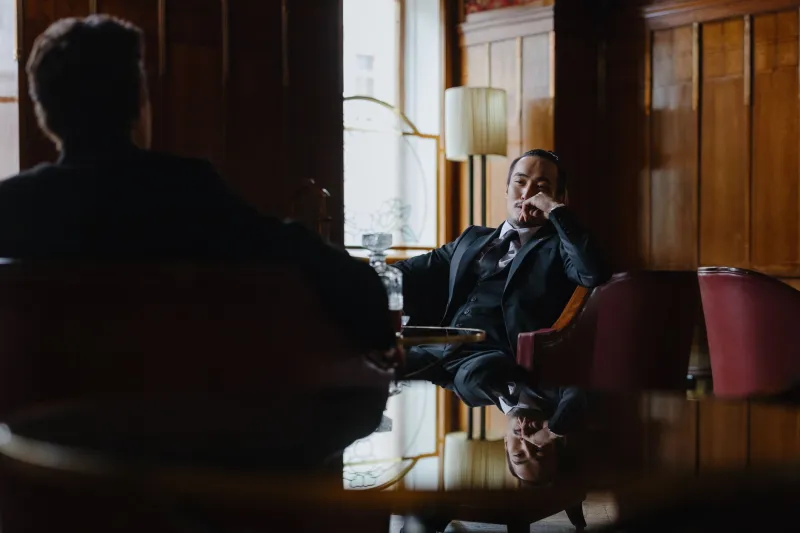
At Your Service, Completely: How a New Class of Ultra-Luxury Concierges Is Redefining Personal Assistance
There is a particular kind of freedom that arrives only after a certain threshold of wealth—not the freedom to acquire, but the freedom to delegate. To hand over not merely tasks, but the cognitive burden of managing a life of extraordinary complexity. This is the promise at the heart of a rapidly evolving industry: the ultra-luxury concierge economy, a sector that has quietly become one of the most dynamic—and most competitive—in American service culture.
What was once a hotel amenity or a corporate travel perk has transformed into something far more ambitious. Today's premier concierge services function less like staffing solutions and more like operating systems for an entire existence—managing everything from medical appointments with internationally renowned specialists to the acquisition of artwork that has not yet come to market.
Beyond the Bellhop: The Modern Concierge Defined
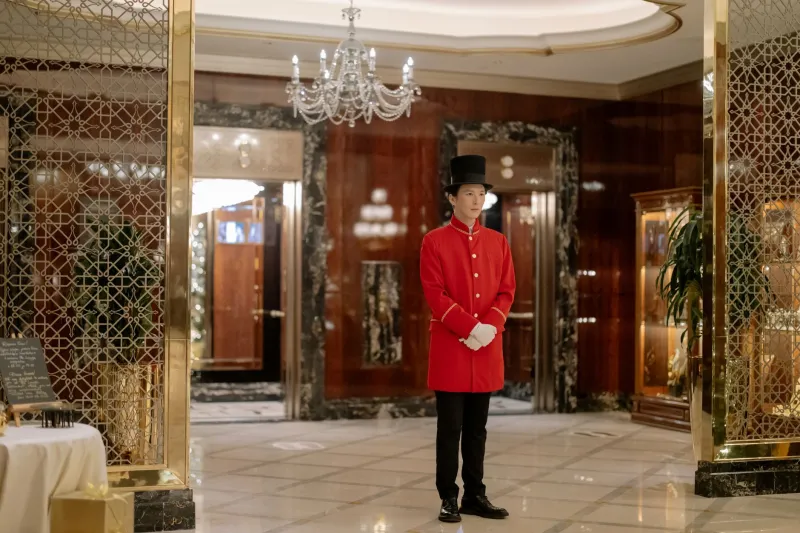
The word "concierge" carries old-world connotations—a uniformed figure behind a marble desk, recommending restaurants and arranging theater tickets. The contemporary reality bears almost no resemblance to that image. The firms now catering to America's wealthiest individuals are staffed by former diplomats, ex-intelligence officers, Michelin-starred chefs turned advisors, and technologists who have built proprietary platforms capable of anticipating a client's needs before the client has articulated them.
Firms such as Quintessentially, Knightsbridge Circle, and a growing roster of boutique American operators have built their reputations on a simple but radical premise: that no request is too complex, and that the measure of true luxury is not what is available, but what is possible. Their client lists—kept with absolute discretion—read, by most accounts, like a cross-section of the Forbes 400, the entertainment industry's upper echelon, and the political class.
The annual membership fees for top-tier services reflect this positioning. Entry into the most exclusive tiers can exceed $100,000 per year, with some bespoke arrangements operating on retainer structures that rival the fees of senior legal counsel.
The Intelligence Layer: AI Meets White-Glove Service
Perhaps the most significant shift in the concierge landscape over the past two years has been the integration of sophisticated artificial intelligence into service delivery. This is not the chatbot-driven customer service that has frustrated consumers across other industries. Rather, it is a deeply personalized intelligence infrastructure built on years of client data, behavioral patterns, and stated and unstated preferences.
Several emerging firms have developed proprietary platforms that function as a kind of living profile of the client—tracking preferred flight configurations, dietary restrictions down to the molecular level, the names and birthdays of a client's extended family, recurring professional obligations, and even the emotional tenor of past interactions. When a client's schedule shifts unexpectedly, the system does not wait for instruction. It anticipates downstream consequences and begins rerouting before the client has registered the disruption.
Jocelyn Mercer, founder of a Los Angeles-based lifestyle management firm that declined to be named for this piece, describes the philosophy driving this model: "Our goal is to make our clients feel as though the world is simply arranged correctly. They should never have the experience of friction. That requires knowing them better than most people know themselves."
The Experience Economy's Apex: Curated Access
Beyond logistics, the most sought-after concierge services have become brokers of the genuinely inaccessible. In a culture where affluence is increasingly common and conventional luxury increasingly commoditized, the true status symbol is access to what money alone cannot purchase.
This manifests in experiences that exist outside the normal commercial infrastructure: a private archaeological tour of a site not yet open to the public, arranged through academic and governmental connections; a dinner hosted in a private apartment in Rome by a chef who does not accept reservations; a front-row seat at a closed rehearsal for a major theatrical production. These are not experiences that appear on any website. They are assembled through relationships, discretion, and years of cultivated trust.
For the Acropolis Club's membership, this model resonates deeply. The club's own philosophy—that the most meaningful experiences are those shared among a curated community of peers—aligns precisely with what the concierge economy's finest operators are building. The best of these services do not simply fulfill requests; they introduce clients to possibilities they would not have imagined to request.
Health, Wellness, and the Whole-Life Mandate
One of the fastest-growing segments within ultra-luxury concierge is comprehensive health and wellness management. This extends well beyond scheduling appointments with sought-after physicians. Leading firms now offer coordinated care ecosystems that include longevity specialists, genetic counselors, performance psychologists, private physical therapists, and nutritionists who travel with clients during extended trips.
In the wake of the pandemic, health sovereignty—the ability to access world-class medical expertise on one's own terms and timeline—became a defining priority for ultra-high-net-worth individuals. Firms that could deliver this capability, reliably and discreetly, found their waiting lists extending by years.
The same logic applies to family: top-tier concierge services increasingly manage not just the principal client's life, but the full household ecosystem—coordinating children's educational enrichment, managing household staff, overseeing estate operations across multiple properties, and ensuring that every member of the family experiences the same seamless standard of care.
Personalization as the New Prestige
In an era when a sufficiently wealthy individual can acquire almost any object, the differentiation has shifted entirely to experience and personalization. The handbag, the watch, the private jet—these remain markers of a certain tier of affluence, but they are no longer sufficient signals of true distinction. What separates the genuinely elite from the merely wealthy is the quality of attention they receive and the degree to which their lives have been tailored, down to the finest detail, to their specific nature.
This is the concierge economy's most profound cultural insight: that the ultimate luxury is not a thing, but a relationship—with a service, with a team, with a set of individuals who have made it their professional purpose to understand you completely and serve you accordingly.
For members of Acropolis Club, this insight is not abstract. It is the lived experience of belonging to an institution that has built its identity around precisely this principle: that excellence, at its highest expression, is always personal.
The Road Ahead
Industry analysts project continued robust growth in the personal concierge sector through the end of the decade, driven by the expanding ranks of ultra-high-net-worth households in the United States, the increasing complexity of global life, and the growing recognition among successful individuals that time—not capital—is the resource most worth protecting.
The firms that will lead this evolution are those that understand a fundamental truth: their clients are not purchasing convenience. They are purchasing sovereignty over their own lives. And in a world of relentless demand and finite hours, that is perhaps the most valuable commodity of all.